

Munchkin
Munchkin is a card game built around dungeon exploration, monster encounters, treasure, and tactical player interaction. Players develop characters with race and class cards, use items and other cards during battles, and work toward reaching level 10 before their opponents.
Screenshots
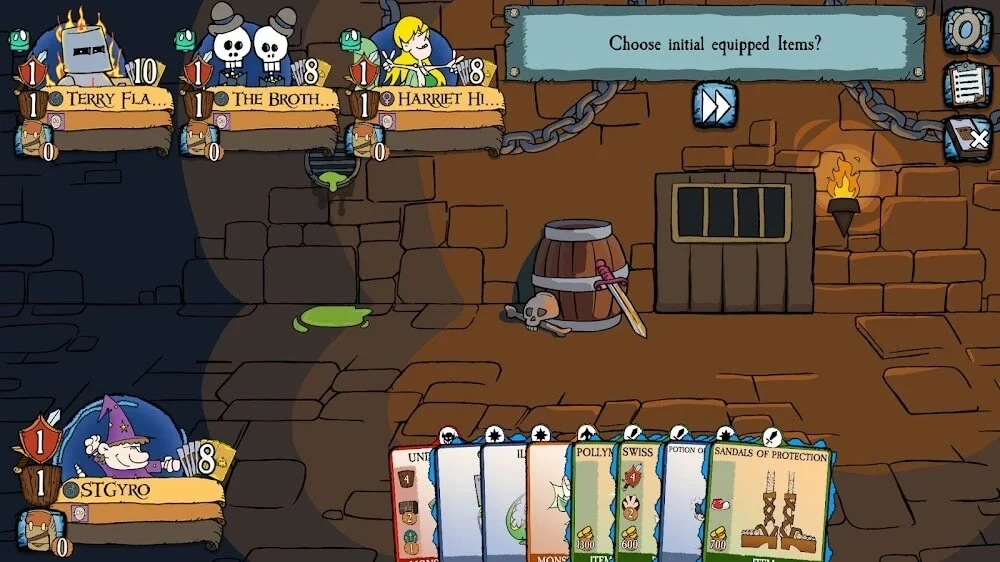
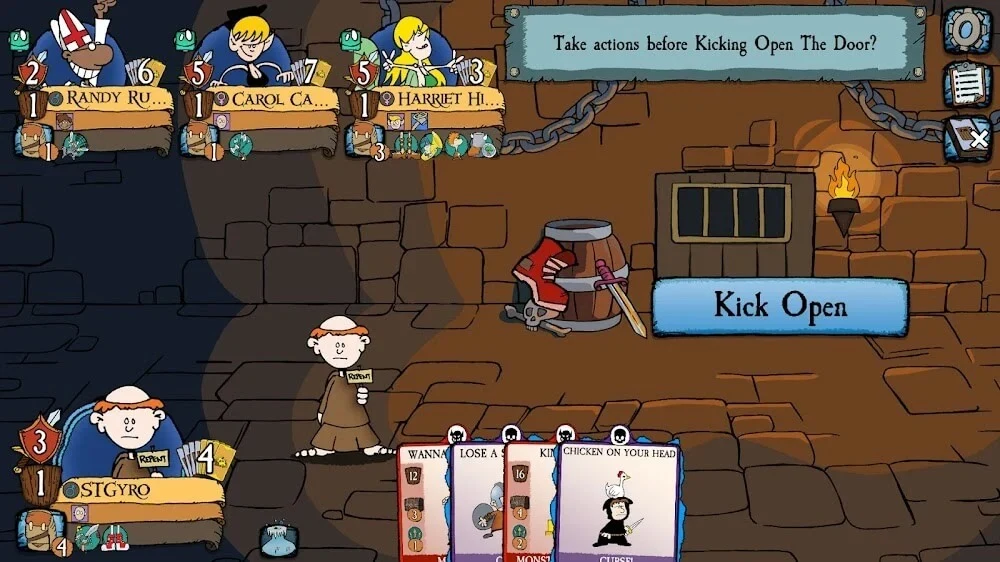
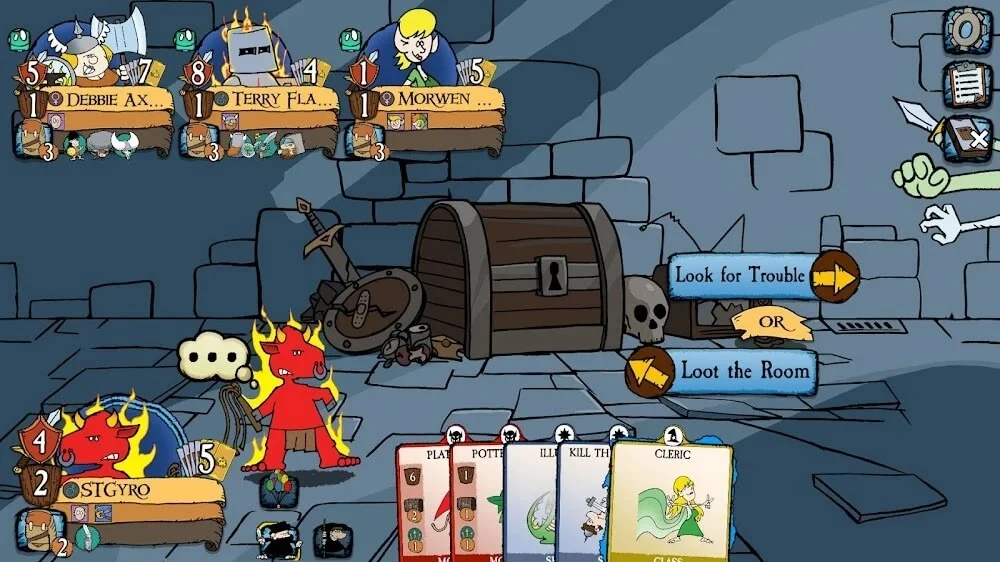
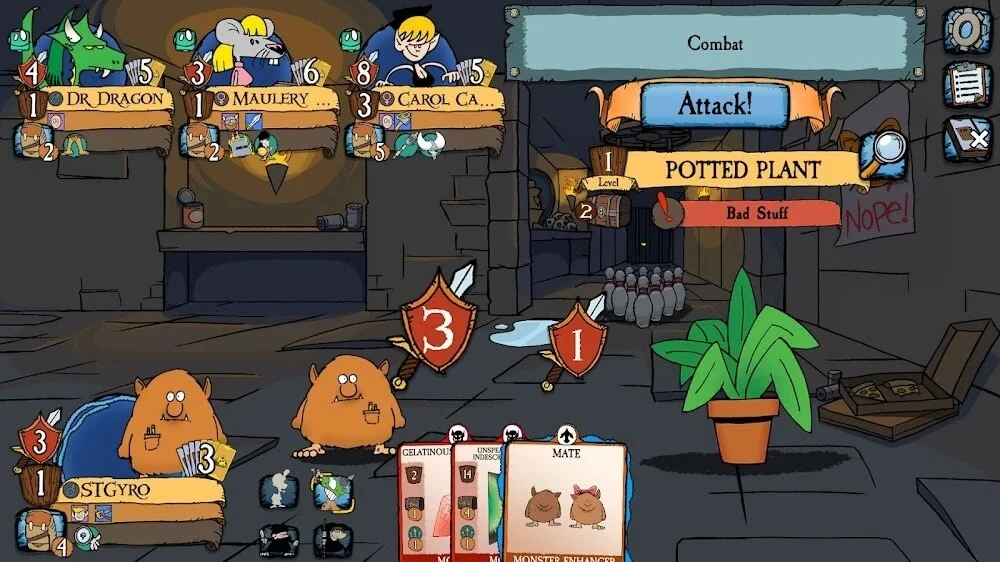
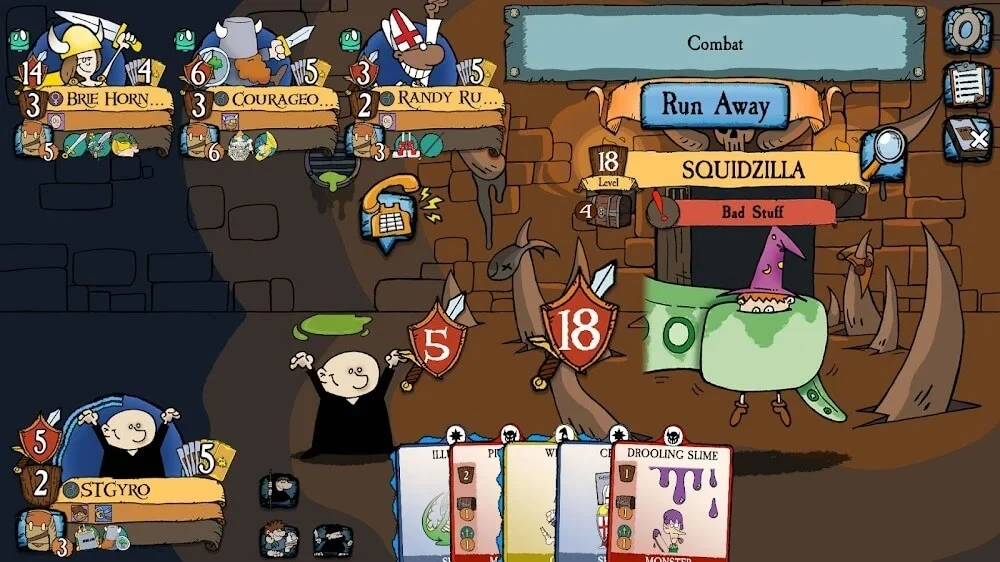
About this app
Munchkin is a card game that combines dungeon exploration with character development, monster battles, treasure hunting, and direct player interference. The documented objective is to become the first player to reach level 10. During a session, players draw and use cards, build their characters, confront enemies, and decide when cooperation, competition, or a carefully timed setback may change the outcome.
Build a character from card types
The game uses several connected card categories, including monster, class, race, treasure, weapon, armor, potion, curse, and other surprise cards. Class and race cards define parts of a character, while equipment and treasure cards provide additional options during play. The source describes the experience as a card-based adaptation in which players can combine cards into a battle deck that suits their chosen approach.
Because cards can affect both character development and combat situations, reading the available abilities is an important part of understanding what a character can do. The source specifically emphasizes checking the wording on class, race, and item cards before making decisions. This keeps the focus on the abilities actually provided by the cards rather than on an assumed character-building system.
Confront monsters and seek treasure
Dungeon rooms are described as containing enemies, treasures, and secrets. Players encounter monsters and must use their available cards when facing them. Defeating monsters is connected to the game's main progression: victories can provide treasure and contribute to gaining levels, while collecting valuable treasure is presented as one of the central reasons to enter dangerous encounters.
When a monster is too powerful, the documented choices include attempting to flee or using special cards to alter the situation. Some cards can transfer negative effects to another player, creating opportunities for interference during a difficult encounter. The source does not define a universal combat formula, so the precise result depends on the cards and rules involved in the current situation.
Race, class, and level progression
Reaching level 10 is the stated winning condition. Players can gain levels through activities such as defeating monsters and using certain level-related cards. Character identity also matters: the source identifies race and class as attributes that can remain relevant even after a character is defeated.
One documented rule described in the supplied material is that dying does not necessarily remove every part of a character. A defeated player keeps their level, race, and class, then receives a new starting hand of cards. This makes defeat part of the card and character cycle rather than an automatic loss of all progress. The practical effect is that a poor situation may be followed by a different hand while some character attributes remain in place.
Use negotiation and uncertainty between players
Munchkin is designed for interaction among three to six players. Other players may help, compete, or interfere, and the source presents betrayal as a recurring part of the experience. Curses and monster-enhancing cards can be used as threats in negotiations. The supplied strategy notes also describe bluffing about having such cards, making table conversation part of the decision-making even when no card is played.
Special cards that move negative effects between players add another layer to monster encounters. Instead of treating every battle as an isolated contest, players must also consider how an action may affect another participant. The source characterizes these interventions as a reason final outcomes can remain unpredictable, but it does not provide a fixed pattern for when another player will assist or interfere.
Choose among different play modes
The supplied description names tournaments and team play as additional modes. In tournaments, players compete across multiple games, with the stated comparison based on wins or the highest cumulative result. Team play divides participants into groups that work together against the opposing team. These modes change the social structure of the card game while retaining its focus on character cards, monsters, treasure, and level progression.
Six-sided dice are also described as tools for resolving battles and other challenges. The source does not specify every dice result or provide a complete resolution table, so the supported point is that dice form part of the game's challenge-resolution system alongside the cards.
Session structure and intended audience
The supplied information describes Munchkin as suitable for ages 10 and up, with a typical playtime of one to two hours. That format gives players time to develop characters, draw and use cards, resolve monster encounters, and react to changing relationships at the table. The central loop remains straightforward to state: build a character, face monsters, collect treasure, gain levels, and try to reach level 10 first.
Its main strategic choices come from how players use the cards available to them, when they accept danger, whether they attempt to flee, and how they respond to other players' possible assistance or interference. The game therefore combines a defined progression target with card-dependent decisions and social uncertainty, without requiring every encounter to follow the same sequence.
Version history
View all24 Mar 2026 · stable